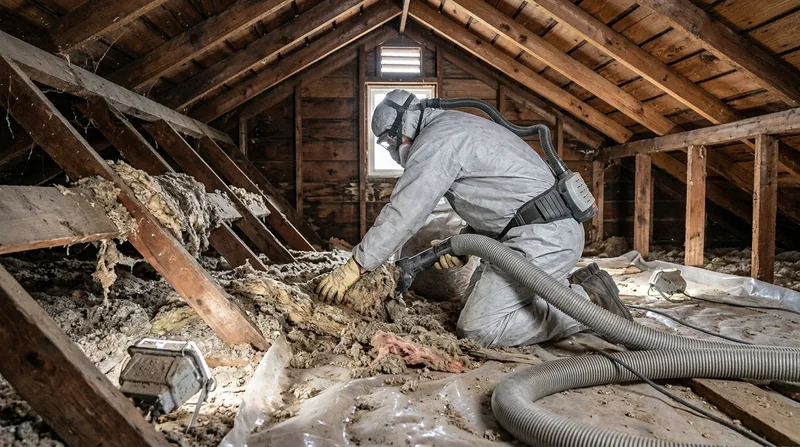




Fort Wayne's early-1900s homes in West Central, Lakeside, and Forest Park carry tight attics packed with decades-old insulation that has settled, absorbed moisture, and lost its R-value. Ranches across the south and east sides, newer two-story subdivisions toward Aboite and Huntertown, and farmhouses throughout Allen County and neighboring rural counties all face the same problem: insulation removal in Fort Wayne is the necessary first step before new spray foam or fiberglass can do its job. In this cold, humid IECC Zone 5A climate, moisture-laden air pushes outward through top plates and rim joists all winter long, and old insulation absorbs that moisture like a sponge. We remove it cleanly, inspect for rodent damage and structural issues, and prepare the cavity for new foam or fiberglass that will actually seal and insulate. The work is straightforward but critical, and getting it right means the difference between a retrofit that works for thirty years and one that fails in five.
Why Insulation Removal Matters in Fort Wayne's Cold Climate
Old insulation in Fort Wayne attics doesn't just sag and settle over time. In our cold, humid climate, winter moisture migrates outward through the attic floor, condenses in the insulation, and turns fiberglass or cellulose into a damp, compressed mat that has zero R-value. Balloon-framed homes from the early 1900s are especially vulnerable because heat and air leak straight up through open wall cavities into the attic, carrying moisture with it. By the time a homeowner feels cold floors or sees a spike in heating bills, the insulation is already compromised. Removing it exposes the actual condition of the attic floor, the rim joists, and the roof deck, so we can identify moisture stains, rodent damage, or structural rot before new insulation goes in. A retrofit built on a sound, dry substrate lasts. One built over hidden damage fails fast.
- We remove all settled, damp, or contaminated insulation down to the substrate.
- We inspect the attic floor, rim joists, roof deck, and structural members for moisture damage and rodent entry.
- We check for vermiculite and flag it for professional testing rather than disturbing it ourselves.
- We document the cavity condition in writing before any new insulation is installed.
A clean attic is the foundation of a successful retrofit, and we never skip that step.
Key info: Fort Wayne's winter humidity and the age of our housing stock mean that moisture damage in attic insulation is the rule, not the exception. Removing it first is not an upsell; it is the only way to know what you are building on.
For more on what happens after removal, see our attic spray foam insulation page.
How We Remove Insulation in Fort Wayne: A Step-by-Step Process
Insulation removal is not a demolition job. It is a methodical process that protects the structure, controls dust and debris, and leaves the attic or crawl space ready for new work. We bring a commercial vacuum system with HEPA filtration to contain dust, we remove insulation in sections and bag it for disposal, and we inspect as we go. In a typical Fort Wayne attic, we might find settled fiberglass over a wooden floor with rim joists exposed on the perimeter, or we might find cellulose over a plywood deck with evidence of past roof leaks. Each scenario requires a different approach, and we adapt on site.
- We set up containment and dust control to keep the work area isolated from living spaces.
- We remove insulation in sections, bag it, and load it into our truck for proper disposal.
- We sweep and vacuum the substrate to remove debris, dust, and loose fibers.
- We inspect the attic floor, joists, rim board, roof deck, and any mechanical systems for damage or moisture.
- We photograph the clean cavity and note any issues in our written report.
- We discuss findings with the homeowner and recommend the next step: spray foam, fiberglass, or a hybrid approach.
The whole process typically takes one to three days depending on attic size and the amount of insulation to remove. We leave the space clean and documented, ready for your next contractor or for us to install new foam.
Local example: A 1920s home in West Central Fort Wayne with a balloon-framed attic and decades of settled fiberglass over open joists. We remove the old insulation, inspect the rim joists for rot, and discover that the rim board is sound but the top plate has a water stain from an old roof leak. Our report flags that, and the homeowner decides to patch the roof before we spray foam. That is the value of removal first: you see what you are dealing with.
Learn more about what comes after removal on our insulation replacement page.
Insulation Removal Methods and What Works Where
| Removal Method | Description | Best For |
|---|---|---|
| Vacuum extraction with HEPA containment | Commercial-grade vacuum system pulls insulation into a sealed bag while HEPA filter traps dust and fibers. | Attics, crawl spaces, and finished basements where dust control is critical and living spaces are below. |
| Manual removal and bagging | Hand-removal of insulation into heavy-duty bags for disposal, used when access is tight or when inspection requires careful handling. | Tight attics, crawl spaces with low headroom, and any cavity where equipment cannot fit. |
| Selective removal and replacement | Remove only the damaged, wet, or contaminated sections of insulation, leaving sound material in place to minimize cost and disruption. | Attics with localized water damage, moisture in one area, or where budget requires a phased approach. |
| Substrate preparation and cleaning | After insulation is removed, we sweep, vacuum, and inspect the substrate (attic floor, joists, rim board, roof deck) for damage and readiness. | Every removal job, to ensure the cavity is clean and documented before new insulation installation begins. |
The right method depends on attic size, access, the type and condition of existing insulation, and whether we find moisture or contamination. We assess on site and recommend the approach that delivers the cleanest result for the best value.
Insulation Removal Cost in Fort Wayne: What to Expect
The cost of insulation removal in Fort Wayne depends on attic size, the type and depth of existing insulation, access difficulty, and whether we find moisture or contamination that requires extra care. A typical attic removal starts at around $950 and can range from $1,200 to $3,500 or more for a large or heavily settled attic. Crawl space removals run higher because of the tight access and the need for dust control in confined spaces. The best way to know your actual cost is to get a free written estimate with our inspection findings and a clear scope. We measure your attic or crawl space, assess the insulation condition, and quote based on what we find, not on guesswork.
Several factors move the price up or down. A small attic with light, dry fiberglass is a quick job. A large attic with deep cellulose, moisture damage, and rodent nesting material requires more time and care. Access difficulty, such as a narrow attic opening or a crawl space with low headroom, adds cost. If we find structural damage, mold staining, or vermiculite that needs flagging for professional testing, we note it and discuss next steps, but those issues themselves do not inflate our removal price. We charge for the removal work, not for discovery.
For a detailed pricing breakdown and to see how removal fits into a full retrofit budget, visit our pricing page. We also recommend getting 2 to 3 estimates from contractors in your area so you can compare scope, method, and price. A low estimate with no detail on what is included or how the work will be done is a red flag. A thorough estimate that explains the method, the expected timeline, and what you will get at the end is the one to trust.
Insulation Removal Near Me: What Fort Wayne Homeowners Should Know When Hiring
Hiring a contractor to remove insulation is a small project compared to a full attic retrofit, but it is still important to hire someone who knows what they are doing. You want a contractor who will remove the old insulation cleanly, inspect the cavity thoroughly, and leave you with a clear report of what they found so you can make an informed decision about your next step. Here is what to ask and what to look for when you call contractors in Fort Wayne and the surrounding areas.
Ask for a written estimate that includes the attic or crawl space size, the type of existing insulation, the removal method, the expected timeline, and the total price. A contractor who will not put an estimate in writing is not someone to hire. Ask for references, particularly homeowners in Fort Wayne or nearby towns like New Haven, Huntertown, or Leo-Cedarville who had insulation removed and then had new foam or fiberglass installed. Ask whether they carry full insurance and verify it with a phone call to their agent. Ask whether they will handle permits if your city requires them for attic work, and understand that permit requirements vary by zip code and building official, so always check with your local building department to see what applies at your address. If you live in an HOA community, check your architectural guidelines to see whether they govern exterior work on your home or any vents that might be involved in your project.
Avoid any contractor who promises a price far below market with no on-site inspection, who refuses to put the scope in writing, or who cannot provide references or proof of insurance. Avoid anyone who tells you they will spray foam over wet or contaminated insulation without first removing and drying the cavity. Avoid any contractor who offers to remove vermiculite insulation themselves rather than flagging it for professional testing. Those are not cost-saving shortcuts; they are signs of poor work and potential liability. For a free estimate and to discuss your specific job, call us at (260) 264-8362 or request an estimate online. We will walk you through the process, answer your questions, and give you a clear picture of what removal will cost and what comes next.
Insulation Removal in Fort Wayne: Pricing Guide
| Service | Price | Details |
|---|---|---|
| Small attic removal | Starting at $950 | Up to 1,200 sq ft with light, dry fiberglass insulation and good access from attic opening |
| Standard attic removal | Starting at $1,500 | 1,200 to 2,000 sq ft with settled fiberglass or cellulose, standard access, and routine inspection |
| Large or difficult attic removal | Starting at $2,500 | Over 2,000 sq ft, deep cellulose, tight access, or evidence of moisture damage or rodent activity |
| Crawl space insulation removal | Starting at $1,800 | Low-headroom access, confined space dust control, and inspection of rim joists and band board |
| Travel and assessment | Included | No separate mileage or call-out fee in Fort Wayne and surrounding Allen County service areas |
| Free written estimate | No obligation | On-site inspection with detailed scope, method, timeline, and price within 24 hours of your call |
Indicative pricing, the exact cost depends on square footage, finish, and site access. Free personalized estimate within 24h at (260) 264-8362.


