Understanding Spray Foam R-Value Per Inch
When evaluating insulation options for your Fort Wayne home, understanding R-value per inch is essential. R-value measures thermal resistance, or how well a material prevents heat transfer. The higher the R-value, the better the insulation performs. This metric becomes your baseline for comparing different insulation types and determining whether your current setup meets modern energy standards.
Closed Cell Spray Foam Insulation typically delivers an R-value of 6 to 7 per inch, making it one of the most efficient insulation materials available. Open Cell Spray Foam Insulation, by contrast, offers approximately 3.5 to 3.6 R-value per inch. Traditional fiberglass batts provide only 3.2 to 3.8 R-value per inch, which explains why many Fort Wayne homeowners are upgrading to spray foam. The difference may seem small, but when applied across an entire attic, it translates to significant energy savings and improved comfort year-round.
R-Value Requirements by State: What Indiana Demands
Indiana building codes specify minimum insulation requirements based on climate zone and building type. For residential attics in Indiana, the current recommended R-value ranges from R-38 to R-49, depending on your specific location within the state. Fort Wayne falls within a climate zone that benefits from higher R-values due to cold winters and variable seasonal temperatures. Meeting or exceeding these standards ensures your home maintains consistent indoor temperatures, reduces heating and cooling costs, and qualifies for energy efficiency incentives.
Understanding your local requirements is the first step in deciding between air sealing alone and a complete spray foam installation. If your current attic insulation falls below the recommended R-38 threshold, you have two main paths: adding more traditional insulation on top of what exists, or removing old material and installing spray foam. Many homeowners discover that spray foam, despite higher upfront costs, delivers better long-term value because it addresses both insulation and air sealing simultaneously. This dual benefit often makes the investment worthwhile when calculated over 10, 15, or 20 years of energy bill reductions.
How Thick Should Spray Foam Be in Your Attic?
Determining the correct thickness for spray foam depends on your target R-value and the type of foam you select. Since closed-cell foam delivers 6 to 7 R-value per inch, achieving an R-49 requirement means applying approximately 7 to 8 inches of material. Open-cell foam, with its lower per-inch rating, would require 13 to 14 inches to reach the same R-value. Most Attic Spray Foam Insulation projects in Fort Wayne use closed-cell foam because it fits within standard rafter heights and offers superior moisture resistance, which is particularly important in Indiana's humid climate.
Your attic's structure and ventilation design influence thickness decisions as well. Spray foam creates an air-tight seal that eliminates convective heat loss, so you may achieve adequate performance with slightly less thickness than traditional insulation would require. A qualified installer will assess your attic's current condition, measure rafter depth, check for existing damage or moisture, and recommend the optimal thickness for your specific situation. Undersizing your foam layer wastes the opportunity to maximize energy efficiency, while oversizing adds unnecessary cost without proportional benefit.
Air Sealing Alone: When It Makes Sense
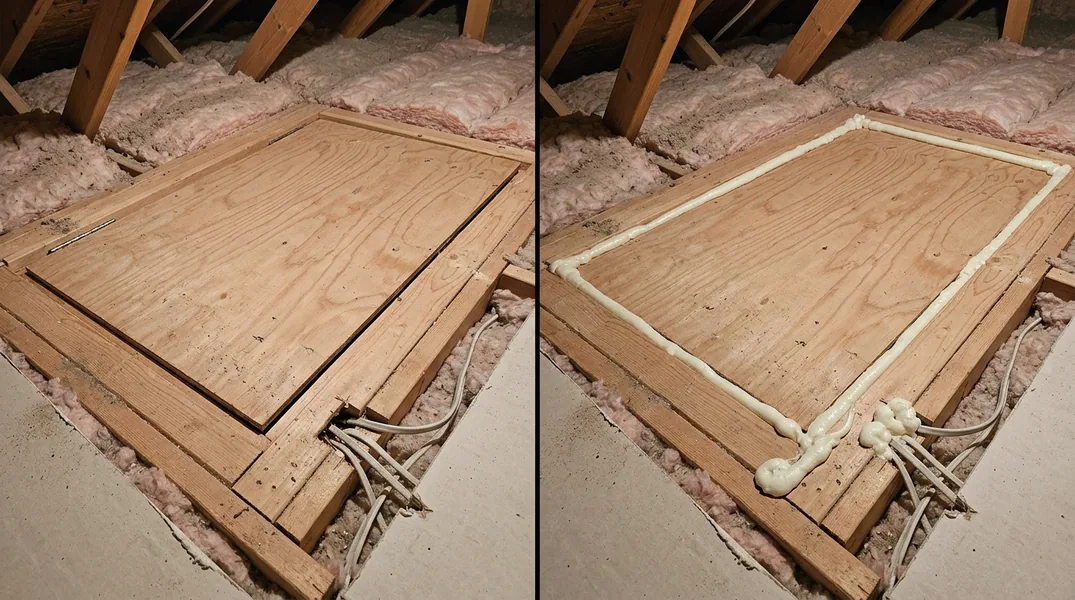
Air sealing focuses on closing gaps, cracks, and penetrations where conditioned air escapes or unconditioned air enters. Common problem areas include gaps around electrical outlets, pipe penetrations, attic access doors, and the rim joist where the foundation meets the walls. For homes with adequate existing insulation that simply has air leakage issues, targeted air sealing can deliver impressive energy savings at a lower price point than full spray foam installation.
However, air sealing has limitations. If your attic insulation already falls short of state requirements, sealing air leaks alone will not bring you into compliance. Additionally, traditional insulation materials like fiberglass batts do not provide the same air-sealing benefit as spray foam. After air sealing, you still face convective heat loss within the insulation itself, meaning your heating and cooling systems must work harder. For most Fort Wayne homeowners whose insulation is aging or insufficient, combining air sealing with spray foam installation delivers superior results and better long-term return on investment.
Insulation Tax Credits and Rebates: Reducing Your Out-of-Pocket Cost
Federal and state incentives can significantly reduce the cost of upgrading your home's insulation. The Residential Energy Credit allows homeowners to claim up to 30 percent of qualified insulation expenses on federal income taxes, with no dollar limit for improvements made through 2032. This credit applies to spray foam and other qualifying materials installed in your primary residence. Additionally, many utility companies in Indiana offer pricing discounts or direct rebates for energy-efficient insulation upgrades, which can lower your net cost by hundreds of dollars.
Before starting your project, contact your utility provider to learn about available rebates and verify that your contractor meets program requirements. Some programs require pre-approval, so timing matters. The combination of federal tax credits and local utility rebates can transform the economics of a spray foam project, making it more affordable than many homeowners expect. When evaluating pricing quotes from contractors, ask about their experience with these incentive programs and whether they can help you navigate the application process.
Attic Spray Foam Insulation Cost in Fort Wayne: What to Budget
Spray foam insulation costs vary based on attic size, foam type, thickness required, and existing conditions. Closed-cell spray foam typically ranges from 1.50 to 2.50 dollars per board foot installed, while open-cell foam costs 0.50 to 1.00 dollar per board foot. For a typical 1,500 square foot attic requiring 7 inches of closed-cell foam to meet R-49 standards, homeowners should budget between 8,000 and 12,000 dollars. This estimate includes labor, materials, and any necessary air sealing work. Open-cell foam projects in the same space might cost 4,000 to 6,000 dollars, but remember that you would need roughly twice the thickness to achieve equivalent R-value performance.
When comparing quotes, ensure each contractor is specifying the same foam type, thickness, and scope of work. The cheapest option is not always the best value, especially when dealing with attic insulation that will protect your home for 20 to 30 years. Fort Wayne Spray Foam Insulation offers transparent pricing and detailed estimates so you understand exactly what you are paying for. To discuss your specific project and receive a customized quote, call (260) 264-8362 or request a free estimate online. Many homeowners are surprised to learn that after applying federal tax credits and utility rebates, their net cost is substantially lower than the initial estimate.
Making the Right Choice for Your Fort Wayne Home
The decision between air sealing alone and full spray foam installation depends on your home's current insulation condition, your energy goals, and your budget. If your attic insulation is relatively new and meets state requirements, targeted air sealing may be a cost-effective first step. However, if your insulation is old, compressed, or insufficient, or if you want maximum energy efficiency and comfort, Attic Spray Foam Insulation is the superior long-term solution.
A professional energy audit can help clarify your home's insulation needs and identify air leakage points. Fort Wayne Spray Foam Insulation can evaluate your attic, explain your options, and help you understand how federal tax credits and local rebates apply to your situation. Whether you are in New Haven, Huntertown, or another nearby community, the same energy efficiency principles apply. Contact us today at (260) 264-8362 to discuss your project and take the first step toward a more comfortable, efficient home.
Looking for a professional spray foam insulation contractor in Fort Wayne? Fort Wayne Spray Foam Insulation responds fast for all your spray foam insulation needs.
Get a Free Quote