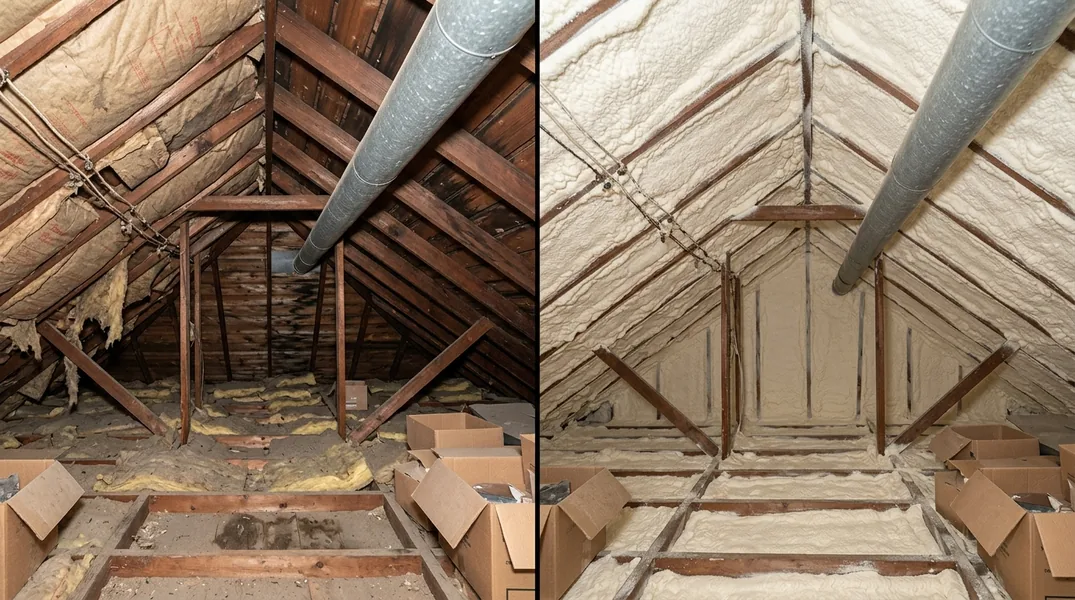
Why Postwar Ranches in Fort Wayne Need Attic Insulation Upgrades
Postwar ranches built across Fort Wayne's South and East Sides represent a significant portion of the city's residential housing stock. These charming mid-century homes, typically constructed between 1945 and 1970, offer character and solid bones. However, many of them suffer from inadequate or deteriorated insulation that fails to meet modern energy efficiency standards.
The original insulation in these ranches, when it exists at all, often consists of loose fiberglass batts or minimal cellulose that has settled over decades. Homeowners in these neighborhoods frequently experience temperature swings, higher heating and cooling costs, and moisture problems that stem directly from poor attic insulation. If you own one of these classic homes, upgrading your attic insulation isn't just about comfort; it's about protecting your investment and reducing energy waste. Contact Fort Wayne Spray Foam Insulation today for a free estimate to see how modern solutions can transform your home's performance.
Spray Foam vs Blown-In Insulation: Which is Best for Your Attic?
When comparing spray foam vs blown in insulation, the differences become clear once you understand how each product works. Blown-in insulation, typically made from fiberglass or cellulose, is installed by blowing loose material into attic cavities. While this approach is less expensive upfront, it has significant limitations. Blown-in materials settle over time, leaving gaps and reducing their R-value effectiveness. They also offer no air sealing properties, meaning warm or cool air can still escape through cracks and penetrations in your attic framing.
Attic Spray Foam Insulation works differently. The foam expands as it's applied, filling every cavity, crack, and void in your attic. This expansion creates an air-tight seal that prevents thermal transfer and air leakage simultaneously. For postwar ranches where air infiltration is a major energy loss culprit, this dual benefit is invaluable. Spray foam maintains its R-value over decades without settling, and it doesn't absorb moisture the way blown-in materials do, making it ideal for attics prone to humidity issues.
Spray Foam vs Fiberglass: A Detailed Comparison for Attic Applications
Fiberglass batts have been the standard attic insulation for generations, and they remain affordable and easy to install. However, spray foam vs fiberglass reveals why many homeowners are making the switch. Fiberglass batts are only effective when installed perfectly between joists with no gaps, and they provide zero air sealing. In older ranch homes where attic framing may be irregular or where there are numerous penetrations for plumbing and electrical lines, achieving perfect fiberglass installation is nearly impossible.
Spray foam adapts to any attic configuration. It conforms around pipes, wires, and structural irregularities without gaps. Fiberglass also degrades over time, especially in humid conditions, and it can harbor dust and allergens. Spray foam is inert and hypoallergenic, creating a healthier indoor environment. Additionally, fiberglass provides no moisture barrier, whereas Closed Cell Spray Foam Insulation acts as both an insulator and a vapor barrier, protecting your attic from condensation and mold growth. For homeowners serious about energy efficiency and long-term performance, spray foam delivers superior results.
Spray Foam vs Cellulose: Why Spray Foam Wins for Historic Fort Wayne Homes
Cellulose insulation, made from recycled paper products, appeals to environmentally conscious homeowners and offers decent initial R-value. However, spray foam vs cellulose is a comparison that favors spray foam for attic applications in older homes. Cellulose is highly susceptible to moisture absorption, which reduces its insulating properties and creates ideal conditions for mold and rot. In Fort Wayne's climate, where seasonal humidity and temperature fluctuations are common, cellulose's moisture sensitivity becomes a liability.
Cellulose also settles significantly over time, sometimes losing 10 to 20 percent of its R-value within the first few years. It requires chemical fire retardants that can off-gas, and it attracts rodents and insects more readily than spray foam. Spray foam, by contrast, is hydrophobic, doesn't settle, and provides a physical barrier that rodents are less likely to penetrate. While cellulose may cost less initially, the long-term performance and durability advantages of spray foam make it the best insulation for attic spaces in postwar ranches where energy efficiency and structural protection matter.
Best Insulation for Attic: Why Spray Foam is the Clear Winner
When homeowners ask what the best insulation for attic is, the answer depends on priorities. If the goal is lowest upfront cost, blown-in or fiberglass might suffice. But if the goal is superior energy efficiency, long-term durability, moisture control, and air sealing all in one product, spray foam is unmatched. The best insulation for attic applications combines high R-value per inch, air sealing capability, moisture resistance, and longevity. Spray foam delivers on all four fronts.
Open Cell Spray Foam Insulation offers excellent R-value and flexibility at a moderate price point, making it ideal for many residential attics. For homes in particularly humid climates or those requiring maximum moisture protection, closed-cell spray foam provides the highest R-value and the most robust vapor barrier. Either option outperforms traditional insulation materials in real-world performance. The investment in spray foam insulation pays dividends through reduced energy bills, improved comfort, and protection against future moisture and pest problems that could compromise your home's structural integrity.
Attic Spray Foam Insulation Cost in Fort Wayne: What to Budget
Homeowners considering spray foam insulation naturally want to understand the financial commitment. Spray foam costs more per square foot than blown-in or fiberglass alternatives, typically ranging from $1.50 to $3.50 per board foot depending on the type and your location. For an average attic space in a postwar ranch, total costs usually fall between $3,000 and $8,000. While this is higher than traditional insulation, the return on investment becomes clear when you factor in long-term energy savings, extended product lifespan, and avoided repair costs from moisture damage.
Many homeowners recoup their spray foam investment within 5 to 10 years through lower heating and cooling bills. Additionally, spray foam can improve home resale value and may qualify for certain energy efficiency tax credits or rebates. To understand the pricing for your specific home and attic size, reach out to Fort Wayne Spray Foam Insulation at (260) 264-8362 or request a free estimate. We'll evaluate your attic's current condition, recommend the appropriate spray foam type, and provide a transparent quote so you can make an informed decision.
Looking for a professional spray foam insulation contractor in Fort Wayne? Fort Wayne Spray Foam Insulation responds fast for all your spray foam insulation needs.
Get a Free Quote